
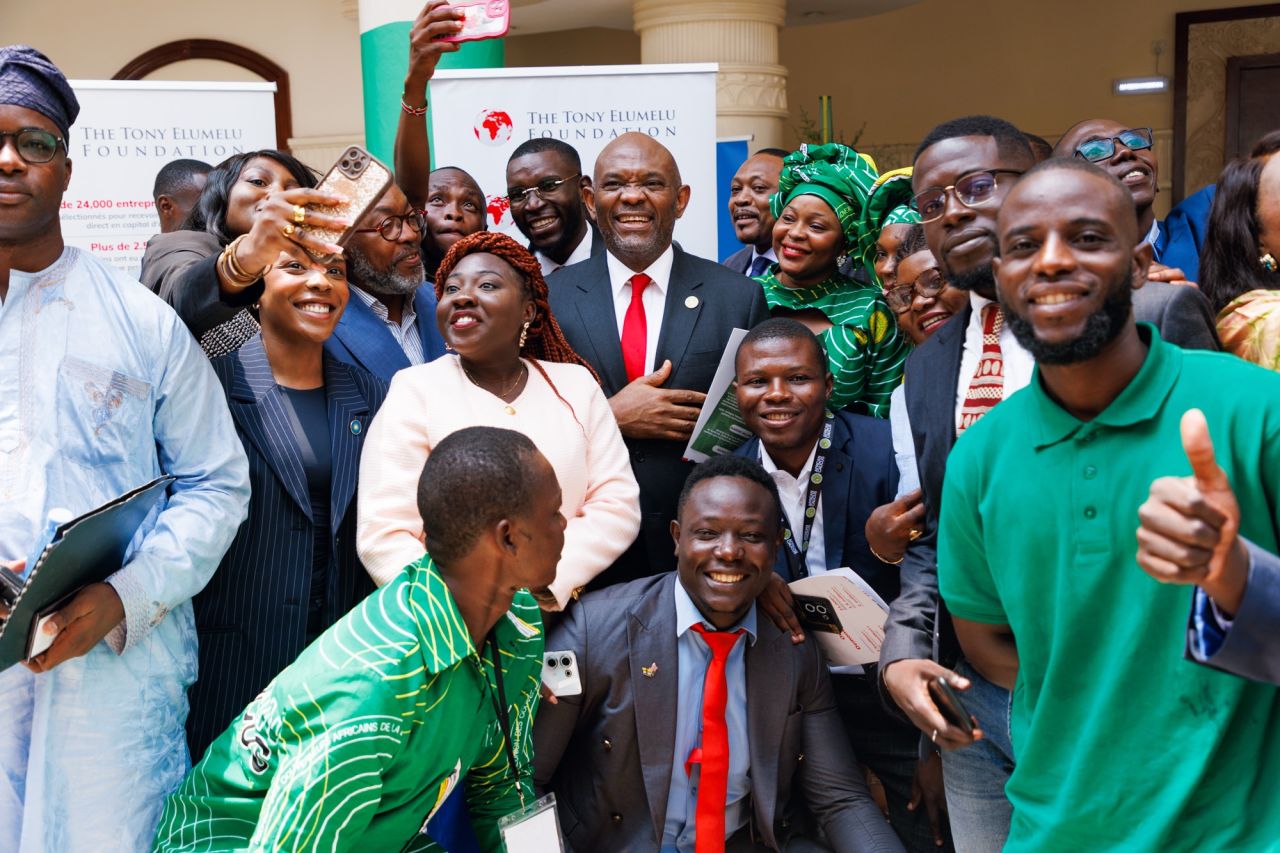
Africa Has the Entrepreneurs. What It Needs Is the Capital to Back Them
Africa does not lack entrepreneurial ambition. Across the continent, entrepreneurs are building businesses, creating livelihoods and developing solutions to some of the most pressing challenges in their communities.
What too often stands between an idea and a thriving enterprise is not a shortage of ingenuity, but access to the right capital at the right time.
In a recent op-ed for Fortune, our founder Tony O. Elumelu, CFR, makes a compelling case for putting early-stage capital at the centre of Africa’s job-creation conversation. His argument points to a fundamental economic reality: the entrepreneurs capable of creating the next generation of African businesses and jobs cannot build at scale if capital reaches them only after they have already proven their success.
At The Tony Elumelu Foundation, we have seen this reality first-hand since 2010.
Capital at the beginning can change everything
For many African entrepreneurs, the earliest stage of a business is also the most difficult.
An entrepreneur may have identified a genuine market need, developed a viable product and found their first customers, yet still lack the working capital needed to purchase equipment, hire an employee, reach new customers or expand production.
Traditional financing can be particularly difficult to access at this stage. Businesses may not have sufficient collateral, long credit history, or the scale that conventional investors typically require.
This creates a paradox: entrepreneurs are expected to demonstrate growth before they can access the capital that would enable that growth.
Early-stage capital can help break that cycle.
A relatively modest investment, when deployed at the right moment, can enable an entrepreneur to move from an idea to a functioning enterprise, from a sole operator to an employer, and from a local solution to a scalable business.
The impact therefore extends beyond the individual entrepreneur.
When a business grows, it can create jobs. Those jobs support households. Growing businesses create demand for suppliers and service providers. They contribute to local economies and, over time, strengthen the productive capacity of communities and countries.
This is why the conversation about entrepreneurial finance is ultimately a conversation about economic development.
Investing in entrepreneurs means investing in Africa
Since 2010, the Tony Elumelu Foundation has championed the belief that African entrepreneurs are not simply beneficiaries of development; they are active drivers of it.
Through its flagship entrepreneurship programme, the Tony Elumelu Foundation provides young African entrepreneurs with training, mentorship, non-refundable seed capital and access to a wider entrepreneurial network.
The approach is rooted in a simple principle: opportunity should not be determined by geography, background, or access to traditional finance networks.
Africa’s entrepreneurs should have the opportunity to build.
But capital alone is not enough.
An entrepreneur may receive funding and still need to understand how to manage cash flow, reach customers, build a team, formalise a business, navigate markets, or prepare for growth. This is why effective entrepreneurship support must go beyond writing a cheque.
It must build capability alongside capital.
It must provide networks alongside funding.
And it must give entrepreneurs the confidence and knowledge to turn an opportunity into a sustainable enterprise.
"I first learned the importance of giving people a chance when, as a child, I watched my mother build a small restaurant through hard work and determination. Later, I benefited from those who believed in my potential and opened doors for me. I call this “democratizing luck”: ensuring access to opportunity is not limited to a fortunate few.” توني أو. إلوميلو CFR
Over 15 years of putting the idea into practice
The recently released 15-Year Impact Report of The Tony Elumelu Foundation, launched on the sidelines of the 81st United Nations General Assembly in New York, documents our journey and the impact of investing in African entrepreneurship at scale.
Since 2010, the Tony Elumelu Foundation has supported entrepreneurs across all 54 African countries, helping to create opportunities for people who might otherwise have remained outside traditional systems of finance and economic opportunity.
The stories captured in the report are ultimately about more than the number of entrepreneurs supported, or the amount of capital deployed.
It is about what happens when African entrepreneurs are allowed to build.
It is about businesses emerging from ideas.
It is about entrepreneurs employing others.
It is about families gaining new sources of income.
It is about communities developing solutions to local problems.
And it is about demonstrating that African entrepreneurs can be both beneficiaries and architects of the continent’s economic transformation.
The Tony Elumelu Foundation’s 15-year journey offers an important lesson: when investment in entrepreneurship is sustained, inclusive and designed around the realities of African businesses, its potential reaches far beyond individual enterprises.
If we want jobs, we must invest in job creators
Africa’s employment challenge makes this more urgent.
The continent has one of the world’s youngest populations, and millions of young Africans will enter the labour market in the years ahead. Creating productive employment at the scale required will demand more than governments and large corporations alone can provide.
It will require millions of businesses to start, survive, grow and hire.
That means entrepreneurs must be recognised as part of Africa’s employment infrastructure.
The conversation therefore needs to evolve.
Instead of asking only how we can create more jobs, we should also ask:
How do we create more job creators?
- Instead of asking only how we can attract capital to Africa, we should ask:
How do we ensure capital reaches entrepreneurs early enough to make a difference?
- And instead of measuring entrepreneurship support only by the number of people trained, we should ask:
What happens to the businesses, jobs, revenues, and communities that emerge afterwards?
These questions shift the conversation from short-term intervention to long-term economic transformation.
The next chapter belongs to those willing to invest in African ambition
Africa does not lack ideas.
It does not lack ambition.
And it does not lack entrepreneurs.
What remains a critical challenge is ensuring that the continent’s financial systems, institutions and development partners are prepared to back that ambition early enough—and consistently enough—for it to reach its full potential.
The Fortune op-ed is an important reminder of why these matters. But the conversation cannot end with recognising the problem.
It must move towards action.
For governments, this means creating environments in which businesses can start and grow.
For financial institutions, it means developing financing models that reflect the realities of early-stage African businesses.
For investors and development partners, it means looking beyond established enterprises and considering the entrepreneurs who are still building.
And for organisations such as The Tony Elumelu Foundation, it means continuing to demonstrate what is possible when African entrepreneurs are given the capital, knowledge and networks to build.
Fifteen years of experience has reinforced a conviction that remains as relevant today as it was when the Foundation began:
When we invest in African entrepreneurs, we invest in Africa’s future.
The opportunity before Africa is not simply to create more entrepreneurs.
It is to give more of them a genuine chance to succeed and, in doing so, create the businesses, jobs and economic opportunities that will shape the continent’s next chapter.
Read the full Fortune op-ed.
Read The Tony Elumelu Foundation’s 15-Year Impact Report.


