
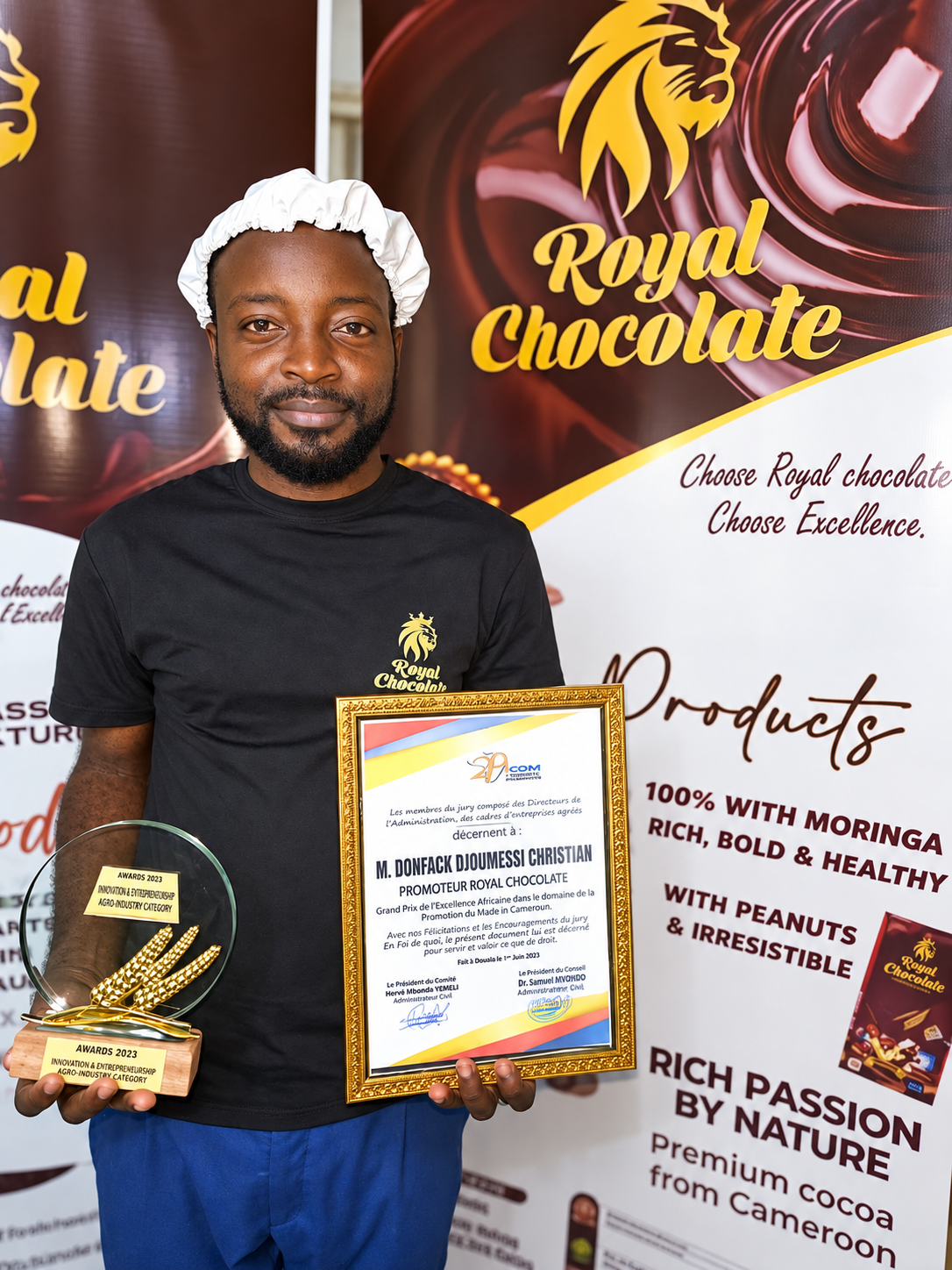
Christian Donfack Djoumessi Is Redefining Luxury Chocolate in Cameroon: A 2019 TEF Success Story
Christian Donfack Djoumessi wants the world to see African cocoa differently.
Cameroon grows cocoa, but for Christian, producing the raw ingredient was only part of the opportunity. The bigger question was what could happen if more of that cocoa was transformed locally into premium products carrying an African identity.
That question led him to create Royal Chocolate, a Cameroonian confectionery company producing handcrafted chocolates that combine locally inspired ingredients, artisanal techniques and contemporary branding.
Fundada em Yaoundé in 2018, Royal Chocolate is building a premium chocolate brand while demonstrating how African entrepreneurs can capture more value from the continent’s agricultural resources.
From cocoa production to African-made luxury
Para Christian Donfack Djoumessi, chocolate represents more than an indulgent product. It is an opportunity to connect agriculture, manufacturing, creativity and African identity.
Cameroon is a major cocoa-producing country, yet much of the value associated with cocoa is generated after the raw commodity leaves the continent. Christian saw an opportunity to change that equation by developing finished chocolate products closer to the source.
At Royal Chocolate, cocoa is transformed into handcrafted products designed for consumers who value quality, distinctive flavours and thoughtful presentation.
The company also incorporates African-inspired ingredients such as moringa, creating products that give familiar chocolate experiences a distinctly local character.
This approach places value addition at the centre of the business. Instead of stopping at cocoa production, Royal Chocolate takes the product further—from raw agricultural commodity to finished, branded consumer product.
Royal Chocolate is growing a premium confectionery brand from Cameroon
Royal Chocolate began as a relatively small operation.
Before joining the Tony Elumelu Foundation Entrepreneurship Programme, the company generated approximately US$20,000 in annual revenue, employed five people and primarily served customers in Yaoundé. Much of its production was manual, limiting how quickly the business could respond to growing demand.
Christian recognised that building a stronger chocolate brand would require more than a good product. Production capacity, packaging, branding and distribution would all have to evolve alongside the business.
Today, Royal Chocolate’s portfolio includes artisan chocolate bars, chocolate-covered treats and premium chocolate collections designed for corporate gifting, celebrations and special occasions.
Its distribution footprint has also expanded beyond Yaoundé. The brand has secured placements in major supermarkets and extended its reach to Douala, Nigeria and Equatorial Guinea, while also working with a distributor in Marrocos.
The expansion reflects a broader ambition: to build a chocolate company from Cameroon that can compete in regional and international markets while retaining its African identity.
How the Tony Elumelu Foundation helped Royal Chocolate scale
For an early-stage manufacturing business, moving from artisanal production towards a more structured operation requires capital, knowledge and the right business networks.
Em 2019, Christian Donfack Djoumessi joined the Programa de Empreendedorismo da Fundação Tony Elumelu, receiving US$5 000 em capital inicial, alongside business training, mentorship and access to the Foundation’s pan-African entrepreneurial network.
The support gave Royal Chocolate an opportunity to strengthen several areas of the business at the same time.
Christian used the seed capital to invest in improved production equipment, enhanced packaging and a more structured distribution model. The programme’s training also strengthened his approach to financial management, branding and business strategy, while mentorship provided additional guidance as the company worked towards greater scale.
The change was reflected in the company’s performance.
Royal Chocolate’s annual revenue grew from approximately US$20,000 to US$45,000, while its workforce increased from five employees to ten. Women now make up the majority of the company’s team, creating additional employment opportunities within the local economy.
For Christian, the growth represents more than increased sales. It demonstrates what can happen when a locally developed product is supported with the resources and business capabilities needed to move from small-scale production towards a stronger commercial operation.
Building value beyond the chocolate bar
The significance of Royal Chocolate extends beyond confectionery.
Chocolate sits at the intersection of agriculture and manufacturing, making it an example of how African economies can create greater value from commodities produced on the continent.
By processing cocoa into finished products in Cameroon, Christian Donfack Djoumessi is participating in a value chain that creates opportunities in production, packaging, sales, distribution and branding.
The company’s journey has also attracted international attention. Royal Chocolate was selected by UNIDO/ITPO as one of Africa’s most scalable businesses and represented Cameroon at the World Entrepreneurship Forum in Dubai.
These milestones have helped place the company within a wider conversation about African businesses moving beyond raw material production and building globally competitive consumer brands.
For Christian, the opportunity is ultimately about changing perceptions—both of what African businesses can produce and of where premium products can come from.
A chocolate brand carrying an African story
The global chocolate industry has traditionally placed considerable emphasis on European craftsmanship and branding, even though cocoa is predominantly grown in tropical regions, including Africa.
Royal Chocolate offers a different proposition.
Its identity is rooted in Cameroon, its primary raw material is cocoa, and its products incorporate ingredients and ideas drawn from the African context. The result is a brand that does not simply participate in the global chocolate market but seeks to bring an African perspective to it.
That distinction matters.
For consumers, it creates an opportunity to discover chocolate through flavours and stories connected to the continent. For African entrepreneurs, it demonstrates the commercial possibilities of transforming locally available resources into finished products with higher value.
What comes next for Christian Donfack Djoumessi and Royal Chocolate
Christian’s ambition is to establish Royal Chocolate as one of Africa’s leading luxury confectionery brands.
The company plans to strengthen automation, improve production efficiency, expand sustainable cocoa sourcing and develop strategic partnerships that can support growth across African and international markets.
The long-term opportunity is significant. As consumers increasingly seek products with distinctive origins, authentic stories and responsible supply chains, African-made premium foods have an opportunity to compete on more than price.
Christian Donfack Djoumessi is building Royal Chocolate around that possibility.
His journey shows that Africa’s cocoa story does not have to end when the beans leave the farm. It can continue through manufacturing, creativity, branding and entrepreneurship—creating products that carry African value from the farm to the finished product and, ultimately, to consumers around the world.
Through Royal Chocolate, Christian is not simply making chocolate in Cameroon. He is building a case for what African value addition can look like when local resources, entrepreneurial ambition and premium branding come together.


